
How to Raise a Baby Sparrow: One Woman’s Journey From Newborn to Release
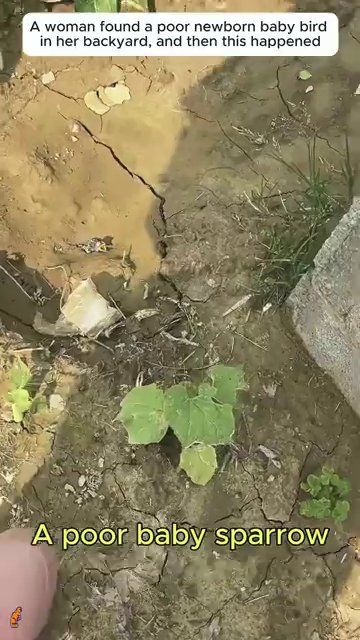
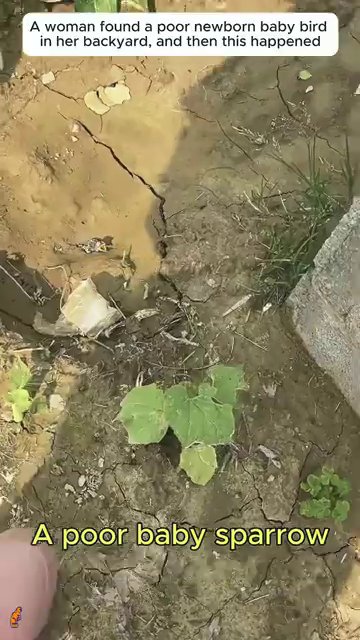
The day started like any other. A quick check of the backyard, a glance at the dry, cracked earth and scattered weeds. Then something small and motionless caught her eye. A newborn bird, barely more than a whisper of gray down, lay alone on the ground. There was no nest above, no frantic parents swooping nearby. Just a tiny life, completely vulnerable, waiting for someone to notice.
That moment of discovery launched a weeks-long journey of round-the-clock care, quiet worry, and slow, steady progress. Here is the story of how one person stepped in to give a baby sparrow a second chance at the wild.
Finding the Baby Bird on the Ground
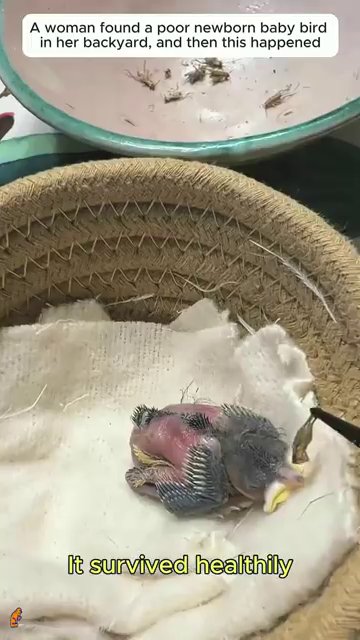
The first sighting was not dramatic. The backyard was unremarkable — a patch of dry soil, a few low plants, nothing that suggested a nursery for wild birds. But there, right in the open, lay a newborn sparrow. It was tiny, mostly featherless, with only a thin layer of gray and brown down covering its body. Its eyes were closed. It did not move much.
This is where many people make a critical mistake. They assume a baby bird on the ground has been abandoned and needs to be rescued immediately. In reality, fledglings — older babies that have left the nest but are still learning to fly — are often left alone while parents gather food. But this bird was not a fledgling. It was a hatchling, far too young to be out of the nest. It had no feathers for flight, no strength to hop. Something had gone wrong.
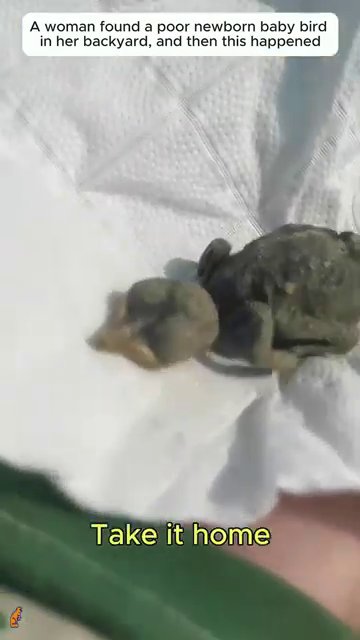
The woman who found it did not hesitate. She knew this bird would not survive the night without help. So she gently scooped it up, cradling it in her hand, and began the work of becoming an accidental bird mother.
Creating a Warm and Safe Nest
The first priority for any rescued baby bird is warmth. Hatchlings cannot regulate their own body temperature. Without a parent to brood them, they chill fast and die.
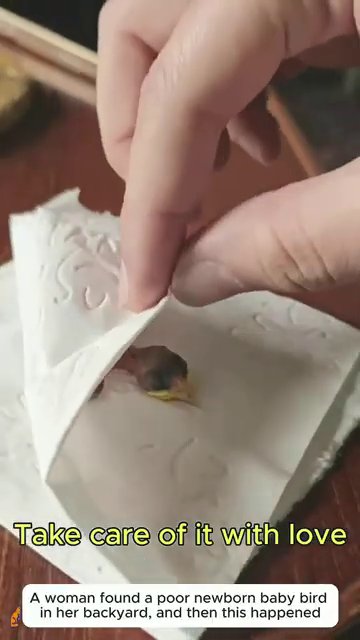
She improvised. A folded paper towel became the base of a makeshift nest. The soft material cradled the bird’s body, keeping it snug and supported. Unlike a basket or a box with hard edges, the paper towel allowed the tiny bird to curl up naturally, tucking its head against its body the way it would in a real nest.
She placed the nest in a quiet, dark, warm space — away from pets, children, and household noise. Stress kills baby birds just as surely as cold does. A calm environment gave this little one a fighting chance.
The Hard Work of Hand-Feeding
This is where the real commitment began. Baby sparrows eat constantly — every 15 to 20 minutes from dawn until dusk. Their parents bring insects, seeds softened in the crop, and other high-protein foods. Replicating that diet at home is not simple.
The rescuer had to learn quickly. She fed the bird a specialized formula designed for insectivorous nestlings, using a small syringe or a pair of blunt tweezers. Each feeding was delicate. Too much pressure and the bird could aspirate. Too little and it would starve.
She watched for the telltale signs of hunger — the open mouth, the trembling head, the soft begging call. When the bird was full, it would turn its head away and settle down to sleep. Then the cycle would start again, hour after hour, day after day.
It is exhausting work. There is no sleeping in when you are raising a baby bird. But there is also something deeply rewarding about watching a creature trust you completely. That tiny mouth gaping wide, demanding food, is a reminder that you are keeping something alive with your own hands.
Watching Feathers Grow and Strength Build
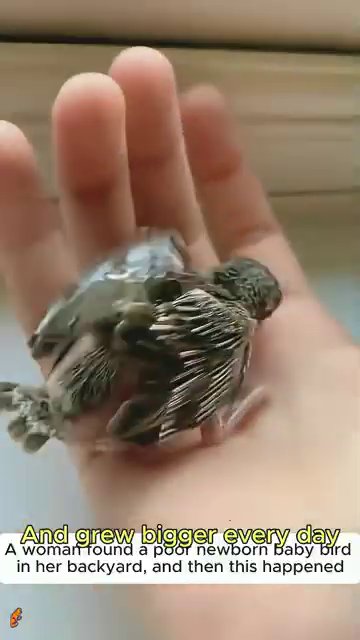
The most visible change came in the feathers. What started as bare skin and sparse down slowly transformed into a proper coat. First came the pin feathers — dark, stiff shafts that looked almost like porcupine quills. Then those sheaths began to split open, revealing the soft, layered feathers underneath.
Day by day, the bird looked less like a strange alien creature and more like a real sparrow. Brown and white feathers filled in across the back and wings. The tail lengthened. The legs grew stronger.
This stage brought a new challenge. The bird no longer wanted to stay in its nest. It would hop to the edge, flap its wings experimentally, and try to explore. Hand-raising a bird means adapting to its growing independence. The rescuer had to provide a larger space — something like a cardboard box with low walls, then eventually a small cage or playpen where the bird could stretch its wings without hurting itself.
She also had to start thinking about the end goal. This bird was not a pet. It was a wild animal, and it needed to stay wild. That meant minimizing human contact as much as possible while still providing care. No cuddling. No talking to it like a companion. The bird had to learn that humans were not safe — they were just food delivery.
It sounds harsh, but it is the kindest thing you can do. A bird that imprints on humans cannot survive in the wild. It will approach people, cars, and predators without fear. True rescue means teaching the bird to be afraid of you.
Preparing for Release
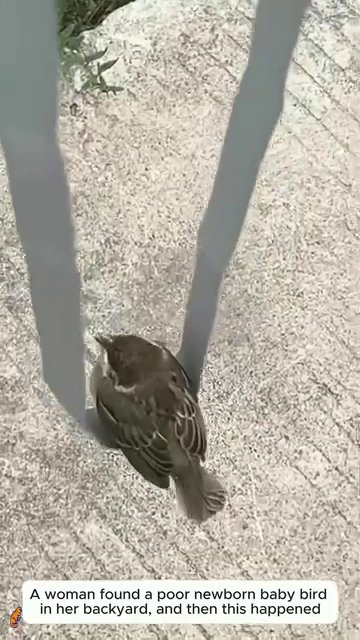
The final stage of the journey is also the most nerve-wracking. The bird looked like an adult sparrow now. It stood tall on concrete and gravel, its feathers sleek and smooth. It could hop, flutter, and fly short distances. It ate on its own, pecking at seeds and insects without help.
But looking like an adult and acting like one are two different things. A bird raised by humans has never learned to find food on its own, to recognize predators, or to navigate the complex social world of wild sparrows. Release has to be gradual.
The rescuer moved the bird to an outdoor enclosure — something like a large cage or aviary placed in the backyard. Here, the bird could experience real weather, real sounds, and real daylight. It could watch other sparrows come and go. It could practice flying in a safe space.
She left the door open during the day, allowing the bird to come and go as it pleased. At first, it stayed close, returning to the enclosure for food and safety. Then the absences grew longer. The bird would spend hours outside, perching on fences and exploring the yard.
The Moment of Letting Go
There is no single dramatic moment of release. No throwing the bird into the air and watching it fly away forever. Instead, it is a slow separation. One morning, the bird does not come back for breakfast. You see it sitting on a fence post across the yard, looking healthy and alert, completely uninterested in you.
That is the goal. That is success.
The woman who found that tiny, helpless hatchling watched it transform into a strong, independent wild bird. She gave it warmth when it was cold, food when it was hungry, and space when it needed to grow. She did not try to keep it. She helped it return to where it belonged.
Key Takeaways for Anyone Who Finds a Baby Bird
If you find a baby bird on the ground, do not rush to rescue it. First, determine whether it is a hatchling or a fledgling. A hatchling has few or no feathers and cannot move well — it needs help. A fledgling has most of its feathers, can hop and flutter, and is probably fine. The parents are likely nearby, watching and waiting for you to leave.
If you are sure the bird needs help, keep it warm, quiet, and safe. Do not give it water or try to feed it without knowing what species it is and what it eats. Contact a licensed wildlife rehabilitator as soon as possible. Raising a wild bird is a full-time job that requires specific knowledge, equipment, and permits.
But if you are in a situation where professional help is not immediately available, and you are willing to commit the time and energy, know this: it is possible. It is hard, messy, and exhausting. And it is also one of the most meaningful things you will ever do.
For more on the early stages of rescue, check out this guide on how to save a newborn bird found alone in your backyard. It covers the first critical steps in detail.
That tiny scrap of life, lying alone on cracked earth, got a second chance because someone stopped and looked. Someone decided to help. And in the end, that is all any of us can do.
