
A Bird, a Glue Trap, and a Second Chance at Flight
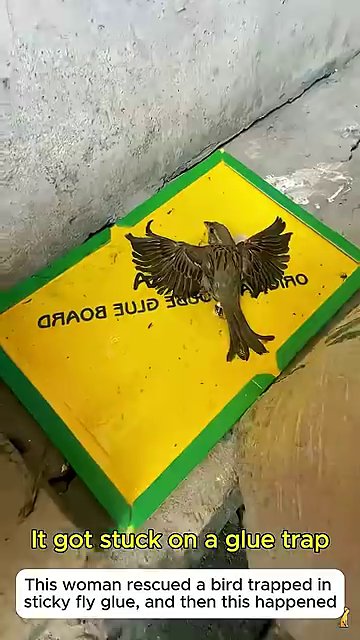
You spot it out of the corner of your eye—a small, dark shape on the ground that doesn’t look right. As you get closer, your stomach drops. It’s a bird, and it’s stuck. Not tangled in string or caught in a fence, but plastered to a glue trap. Its wings are spread wide, feathers matted against the sticky yellow board. It’s still alive, still struggling, but every movement only makes things worse. This is the moment that turns a passerby into a rescuer.
Glue traps are indiscriminate. They don’t catch just mice or insects. They catch whatever touches them—including birds, lizards, and even small mammals. When a bird lands on one, the result is almost always fatal without human intervention. The bird cannot preen, cannot fly, cannot escape. It tires. It dehydrates. And if left alone, it dies slowly. But with the right approach, you can give that bird a second chance.
What You’re Seeing: The Bird’s Condition
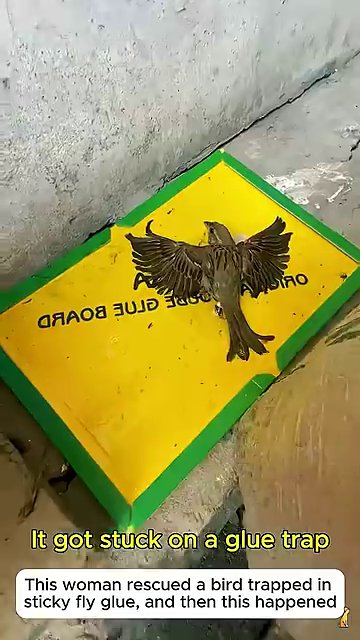
In this rescue, the bird is a small brown and black species—likely a sparrow or finch, based on its size and coloring. It’s stuck on a yellow and green glue trap that’s lying on a concrete floor against a wall. The bird’s wings are spread out, pressed into the adhesive. Every instinct it has is telling it to flap and flee, but that only drives the feathers deeper into the glue.
The first thing to understand is that the bird is in shock. It’s not just physically stuck; it’s terrified. Birds have a high metabolic rate and a low tolerance for stress. A few minutes of panic can exhaust them to the point of collapse. That’s why the rescue has to be calm, deliberate, and gentle. Rushing or grabbing roughly can cause more harm than the glue itself.
The Rescue: Getting the Bird Free
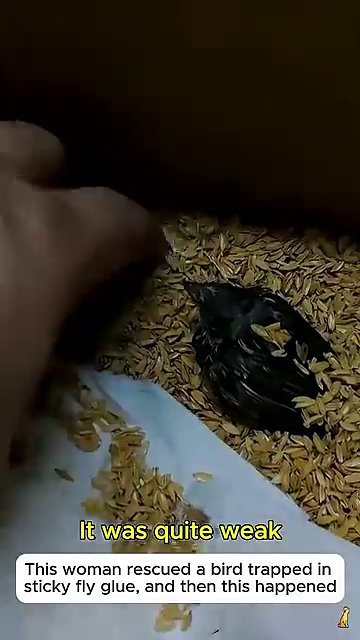
The rescuer in this case does something crucial: they prepare before they act. You can see a hand reaching for something on a surface covered with rice or grains. This isn’t random. The rescuer is setting up a safe space for the bird once it’s free. A container with soft bedding, some food, and a quiet environment is essential.
To free a bird from a glue trap, you need a few things:
– Vegetable oil or cooking oil – This breaks down the adhesive.
– Cotton swabs or soft cloth – For applying the oil gently.
– A warm, quiet space – The bird will need to recover after the ordeal.
– Patience – This is not a quick process.
The trick is to work slowly. Apply oil around the edges of the bird’s feathers and the trap, letting it soak into the glue. Never pull or yank. The bird’s skin is thin and fragile. Instead, let the oil do the work. As the glue softens, the bird can be lifted free. It’s a delicate operation—like removing a bandage from a wound, but with a living creature that’s scared and flapping.
Feeding and Hydration: The First Step to Recovery
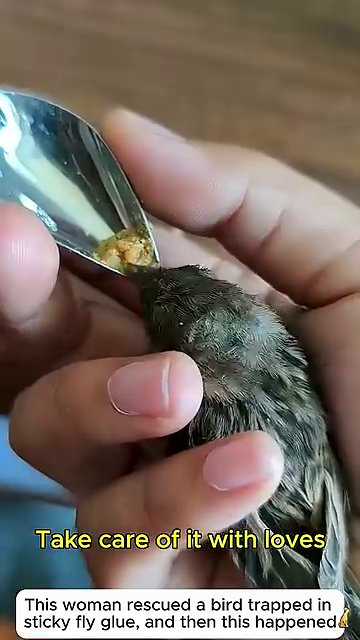
Once the bird is free, it’s not out of danger. The struggle has drained its energy. In the visual notes, you see the bird being fed with a spoon. The spoon contains a yellow substance—likely a soft food mixture, perhaps egg yolk or a specialized bird formula. This is critical.
Birds that have been stuck on glue traps are often dehydrated and hypoglycemic. Their blood sugar drops fast. A few small feedings of a high-energy food can stabilize them. But you have to be careful. Never force-feed a bird. Offer the food at the tip of its beak and let it take it voluntarily. If the bird is too weak to swallow, it needs a wildlife rehabilitator immediately.
The rescuer here is patient. The bird is held in a cupped hand, which provides warmth and security. Birds are prey animals; being held can be stressful, but a gentle, steady hand can also calm them. The rescuer’s thumb supports the bird’s head, keeping it upright so it can swallow safely.
The Struggle to Fly Again
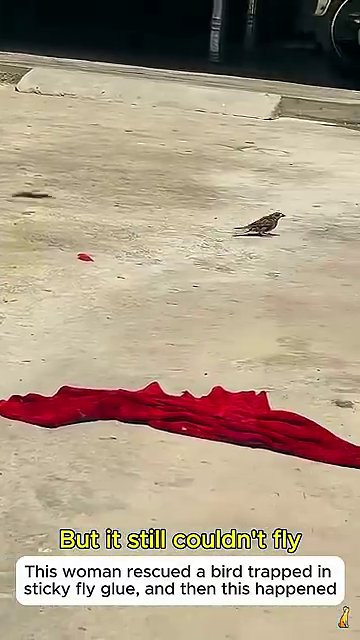
Even after feeding and cleaning, the bird isn’t ready to go. The visual notes show it on the ground with a red cloth nearby, still unable to fly. This is a common stage. The glue may have damaged the feather structure, or the bird may simply be too weak. Flight takes a lot of energy. A bird that’s spent hours fighting a glue trap may need days to recover.
This is where rehabilitation becomes more than just first aid. The bird needs time to regain strength. It also needs to practice flying. You can see the rescuer holding the bird on an open hand, with greenery in the background—likely an outdoor or semi-outdoor space. This is flight practice. The bird is being encouraged to flap its wings and build muscle memory.
If you’re doing this yourself, start low. Hold the bird at knee height and let it hop or flutter to the ground. Gradually increase the height as the bird shows more strength. Never toss a bird into the air. That’s terrifying for them and can cause injury if they’re not ready.
When to Step In and When to Step Back
One of the hardest parts of wildlife rescue is knowing when to intervene and when to let nature take its course. A bird stuck on a glue trap is a clear case for intervention—it’s a human-made hazard, and the bird has no way out on its own. But once the bird is free and stable, the goal is to return it to the wild as quickly as possible.
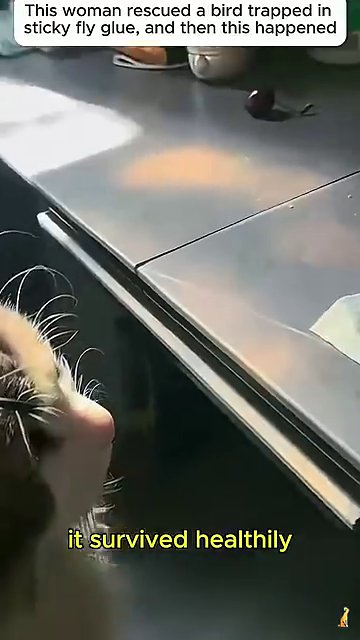
That means keeping handling to a minimum. Don’t treat the bird like a pet. Don’t keep it indoors longer than necessary. A rehabbed bird that becomes too comfortable with humans may struggle to survive on its own. The rescuer in this video seems to understand that balance—they care for the bird intensively at first, then gradually shift to hands-off support.
If you’re ever in this situation, contact a local wildlife rehabilitator. They can advise you on the specific needs of the species you’ve found. In many areas, it’s also illegal to keep native birds without a permit. A rehabber has the training and resources to give the bird the best chance.
The Happy Ending: A Bird That Flies Again
The final images show the bird recovering. It’s no longer stuck, no longer weak. It’s perching, flapping, and preparing to take off. That’s the moment every rescuer waits for—the bird lifting into the air, free and whole again.
This story is a reminder that small actions matter. A glue trap is a cheap, cruel device, but one person’s willingness to stop and help can undo the damage. The bird in this rescue didn’t die on a sticky board. It got a second chance because someone noticed, someone cared, and someone took the time to do it right.
If you find a bird in a similar situation, don’t walk past. You can make the difference between a slow death and a full recovery. And if you want to learn more about rescuing young birds, check out this guide on saving a newborn bird found alone in your backyard. It covers the basics of assessment, feeding, and when to call a professional.
The bird in this story is safe now. It’s flying somewhere, probably not thinking about the glue trap at all. But the person who saved it will remember. And now, so will you.
