
How to Save a Weak Newborn Piglet: A Story of Rescue and Recovery
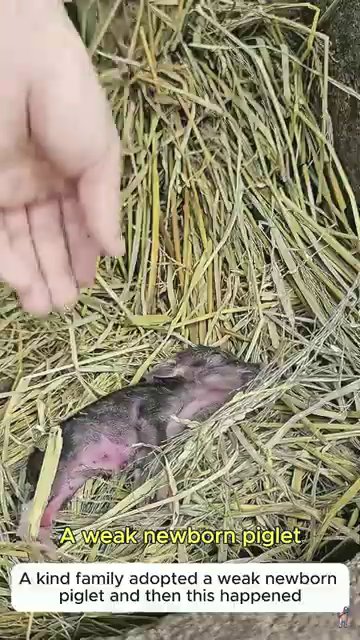
There’s something heartbreaking about seeing a newborn animal too weak to stand. When you find a tiny piglet lying motionless in the straw, barely breathing, the instinct to step in and help takes over. This is a story about one such rescue — and what it really takes to bring a fading life back from the edge.
Spotting the Signs of a Piglet in Trouble
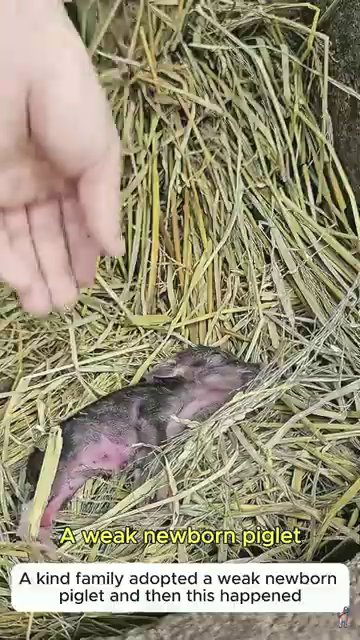
Newborn piglets are surprisingly resilient, but they’re also incredibly fragile. Within hours of birth, they should be on their feet, moving toward the sow for warmth and colostrum. When a piglet can’t do that — when it just lies there, limp and unresponsive — you know something is wrong.
In this case, the piglet was found alone on the straw, separated from its mother and littermates. Its body looked small and weak. The legs weren’t tucked properly. The head lay flat. These are the visual cues that tell an experienced rescuer: this animal needs immediate intervention.
The causes can vary. Sometimes it’s a difficult birth. Sometimes the piglet didn’t get enough colostrum in those critical first hours. Other times, it’s simple chilling — piglets have almost no body fat at birth and can drop dangerously cold fast. Whatever the reason, the clock is ticking.
The First Critical Steps: Warmth and Nourishment
The young woman who found this piglet didn’t hesitate. She brought it into a warm, controlled environment. That’s the first rule of newborn piglet rescue: heat is everything. A chilled piglet can’t digest milk. It can’t move. It can barely breathe.

She began bottle-feeding the piglet. This is where patience becomes a virtue. Weak piglets often don’t have the energy to suckle properly. You have to support their head, keep them angled correctly, and let them take milk at their own pace. Force-feeding can cause aspiration, which is often fatal.
The milk itself matters too. Cow’s milk won’t cut it — piglets need a specific balance of fat and protein. Commercial sow milk replacer is the gold standard. If that isn’t available, a carefully mixed homemade formula can work temporarily, but it’s not ideal.
Watching the Turnaround: From Limp to Lively
Here’s where the story gets good. After a few feedings and consistent warmth, the piglet started showing signs of life. Real life. Not just breathing, but moving with purpose. Its legs began to push. Its head lifted.
This is the moment every rescuer lives for. You see that flicker of energy return. The piglet’s eyes become brighter. It starts rooting around, looking for the bottle on its own. That first time it stands, even for a few seconds, feels like a victory.

The piglet began interacting. It would nuzzle against a person’s legs, exploring the world that had almost slipped away from it. This is normal piglet behavior — they’re social animals by nature. Once they feel safe and strong, they want to connect.
Integrating a Rescue Piglet into Family Life
One of the most rewarding parts of this kind of rescue is watching the piglet bond with people, especially children. Pigs are incredibly intelligent and emotionally complex animals. They form attachments. They remember kindness.
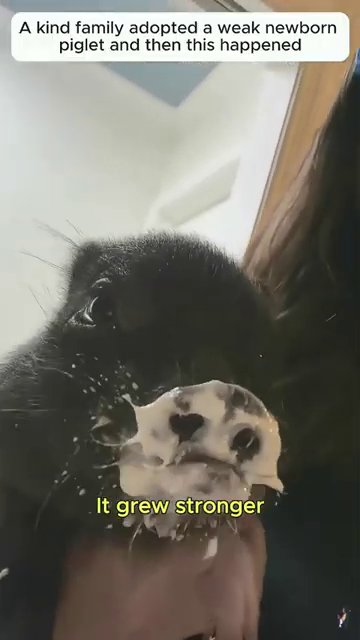
The children in this story clearly adored the piglet. There’s something special about seeing a child learn compassion through hands-on animal care. It teaches responsibility, gentleness, and respect for life. The piglet, for its part, seemed to thrive on the attention. Pigs are social creatures, and isolation can actually slow their recovery.
If you’re raising a rescued piglet, supervision is essential — especially around small children. Piglets can be mouthy, and even a playful nip can startle a toddler. But with proper guidance, these interactions build beautiful bonds.
The Remarkable Transformation
The visual change over the following days was striking. The same piglet that once lay limp and fading was now running around, playful and energetic. It would trot across the floor, tail curled, snuffling at everything in its path. Its coat became glossier. Its eyes were clear and alert.

Piglets grow fast — really fast. A healthy piglet can double its birth weight in the first week. That rapid growth demands consistent feeding and a clean living environment. Dirty bedding or stale milk can undo all your hard work. Keep the space dry, warm, and sanitized.
What This Rescue Teaches Us
Not every rescue attempt works. That’s the hard truth. Some piglets come into this world too weak, too cold, too far gone. But when it does work — when you see that tiny creature transform into a thriving, playful animal — it reinforces why we try.

The key takeaways from this story are simple but worth repeating:
- Warmth first. A cold piglet cannot digest food. Use heat lamps, warm towels, or a brooder.
- Proper nutrition matters. Use sow milk replacer, not cow’s milk. Feed small amounts frequently.
- Handle gently. Weak piglets are fragile. Support the head and neck during feeding.
- Social interaction helps. Once stable, let the piglet bond with people and other animals.
- Cleanliness prevents illness. A dirty environment can kill a recovering piglet faster than hunger.
This piglet was lucky. It found someone who knew what to do and acted fast. It also found a home where it would be loved — not just as a rescue, but as a member of the family.

If you ever find yourself facing a similar situation — a newborn animal that seems beyond saving — don’t give up immediately. Get it warm. Get it fed. Give it time. You might be surprised by how strong even the smallest life can be.
For more stories about rescuing vulnerable newborn animals, check out how to save a newborn bird found alone in your backyard. Different species, same principle: quick action and gentle care make all the difference.
