
A Man Found a Stray Kitten in His Garden. What Happened Next Will Restore Your Faith in People
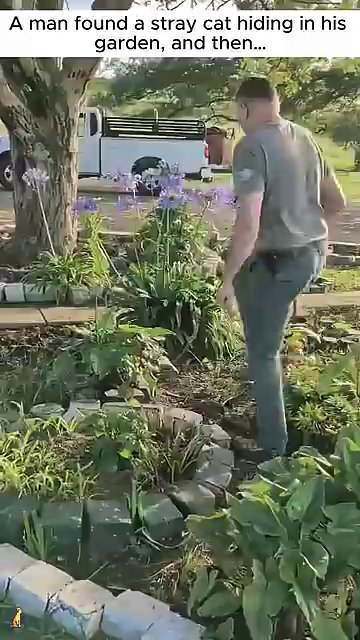
It starts with a quiet moment in a garden. A man, walking through the greenery, scans the ground near a tree. He isn’t looking for anything in particular—just enjoying the afternoon. Then he spots something small, wet, and utterly helpless. What he does next changes everything for one tiny creature.
This isn’t a story about finding a lost pet. It’s a story about choosing to stop, to care, and to offer a second chance. And it begins with a single, simple act of noticing.
The Discovery: A Small, Soaked Survivor
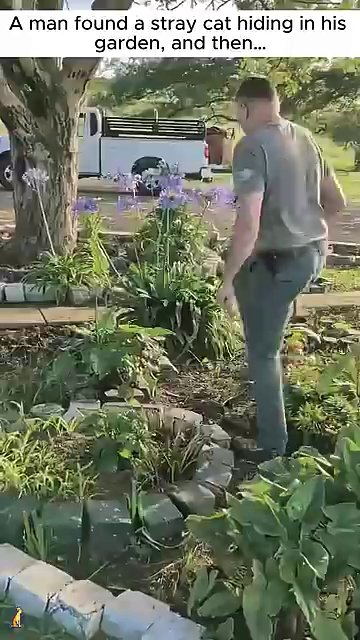
The man in the gray t-shirt was doing what many of us do—tending to his garden, letting his mind wander. But something made him pause. There, tucked among the plants, was a tiny cat. It wasn’t just any cat. This one was soaking wet, its light-brown fur plastered against a thin body. Dark spots stood out starkly against the damp coat.
You can imagine the moment. The surprise, then the concern. This wasn’t a healthy, well-fed stray. This was an animal in distress. The cat was small, likely young, and clearly in trouble. It wasn’t hiding or hissing. It was simply there, too weak or too scared to move.
The man didn’t walk away. He bent down, picked up the fragile creature, and made a decision. He would help.
The First Step: Feeding and Warming
Bringing a stray animal home is one thing. Knowing what to do next is another. The first priority for any rescued animal, especially a young one, is warmth and hydration. Hypothermia and dehydration are the two biggest killers of found kittens.
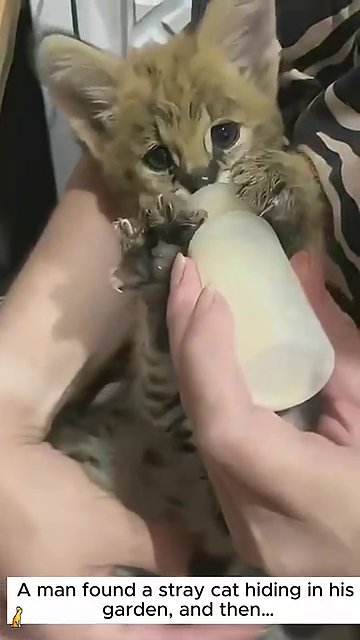
The man did exactly what needed to be done. He held the tiny cat and offered it a bottle. The kitten latched on immediately, drinking eagerly. That simple act—feeding—is the first bridge between fear and trust. It’s also the moment a rescuer realizes: This little one wants to live.
If you ever find yourself in a similar situation, remember this: do not give cow’s milk. It can cause severe diarrhea in kittens. Use a kitten milk replacement formula from a pet store or vet. And keep the animal warm—wrap it in a soft towel, use a heating pad on low, or hold it close to your body heat.
From Frail to Playful: The First Signs of Recovery
The most rewarding part of any rescue is watching the transformation. It doesn’t happen overnight. But when it starts, it’s unmistakable.
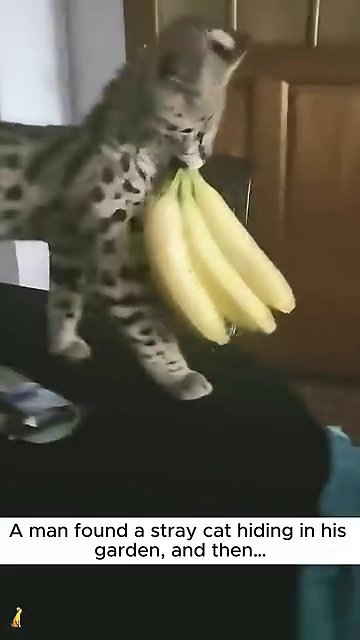
A few days or weeks later, the same cat looked like a different animal. Its fur had dried and fluffed up, revealing a beautiful pattern of light-brown with dark spots and stripes. It had put on weight. Its eyes were bright. And it was playing.
The video captures a wonderful moment: the kitten, now clearly comfortable, batting at a bunch of bananas. A simple household object became a toy. That’s the magic of a safe environment. When an animal stops worrying about survival, it starts discovering joy.
This is where it gets interesting. The cat’s coat pattern—spots combined with stripes—suggests it might be a tabby with a ticking pattern, or possibly a mix with a wilder lineage. But whatever its genetics, its behavior told a clear story: it felt safe enough to be curious.
Exploring a New World: Curiosity Over Fear
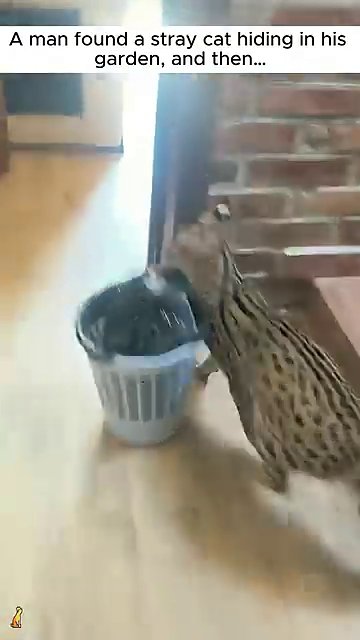
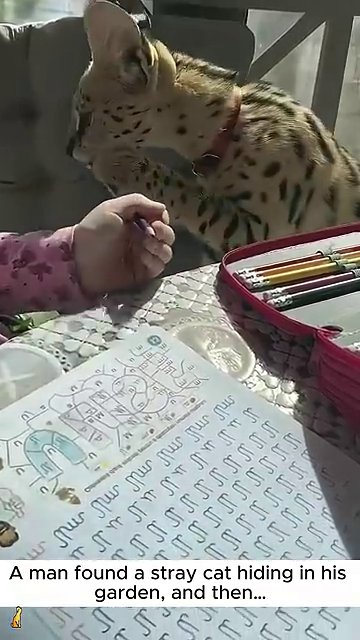
Once a rescued animal gains strength, the next phase begins: exploration. The cat started venturing around the house, sniffing corners, investigating furniture. One particularly charming moment shows it peeking into a trash can.
Now, some people might see that as mischief. But to an animal behaviorist, it’s a sign of confidence. A scared cat hides. A curious cat explores. The fact that this kitten was poking its nose into things meant it no longer saw the home as a threat. It saw it as its territory.
This phase requires patience. Let the animal set the pace. Don’t force interaction. Place food, water, and a litter box in quiet, accessible spots. Allow the cat to come to you. Trust built on the animal’s terms is trust that lasts.
The Bond Forms: A Paw on the Shoulder
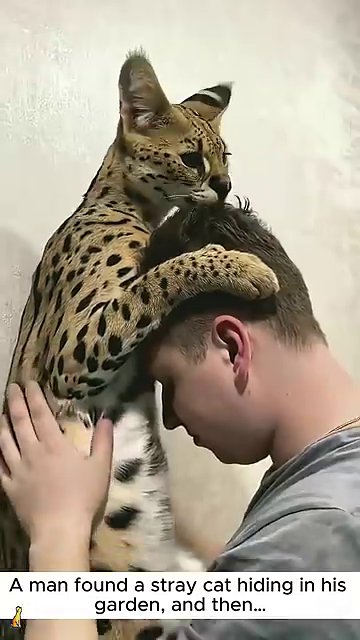
Then comes the moment every rescuer waits for. The cat, now fully recovered, climbs onto the man. It rests its head against him. It places a paw gently on his shoulder.
This is not just a cat being friendly. This is an animal that was once lost, wet, and starving, now choosing to be close to the person who saved it. That paw on the shoulder? That’s a gesture of trust. In feline body language, it means: I feel safe with you. I consider you part of my family.
The man’s response is equally telling. He doesn’t grab or restrain. He simply touches the cat gently, acknowledging the affection without overwhelming it. This is how healthy human-animal bonds develop—through mutual respect and gentle presence.
If you’ve ever rescued an animal, you know this feeling. It’s not about ownership. It’s about connection. The animal chose to stay. It chose to trust. And that trust is a gift.
What This Story Teaches Us About Rescue
This story is simple, but it carries lessons that go beyond one man and one cat.
First, rescue doesn’t require a plan. The man wasn’t looking for a pet. He didn’t have a carrier or a bag of kitten food ready. He just saw a need and responded. That willingness to act is the most important part.
Second, the animal will tell you what it needs. The kitten drank when offered milk. It played when it felt strong. It sought affection when it felt safe. The man didn’t force a schedule. He simply provided the basics—food, warmth, safety—and let the cat guide the rest.
Third, the reward is relational. The man didn’t rescue the cat for praise or social media attention. He did it because it was the right thing. And the reward came naturally: a living creature, once on the verge of death, now healthy, happy, and full of love.
Practical Takeaways for Anyone Who Finds a Stray
If you ever find yourself in a similar situation, here’s what to keep in mind:
- Check for a mother first. If the kitten is clean, warm, and not crying excessively, the mother may be nearby. Observe from a distance before intervening.
- Warm them up immediately. Hypothermia is the biggest threat. Use a towel, your body heat, or a low-setting heating pad.
- Hydrate and feed carefully. Use kitten milk replacer, not cow’s milk. Feed every 2-3 hours for very young kittens.
- Visit a vet. Even if the animal looks healthy, a vet can check for parasites, infections, and hidden injuries.
- Give them space. Let the animal adjust to your home slowly. A quiet room with food, water, and a litter box is ideal.
- Be patient with trust. Some animals bond quickly. Others take weeks. Let them come to you.
For more stories about rescuing vulnerable animals, you might find this article helpful: How to Save a Newborn Bird Found Alone in Your Backyard. The principles of warmth, feeding, and patience apply across species.
A Happy Ending Worth Celebrating
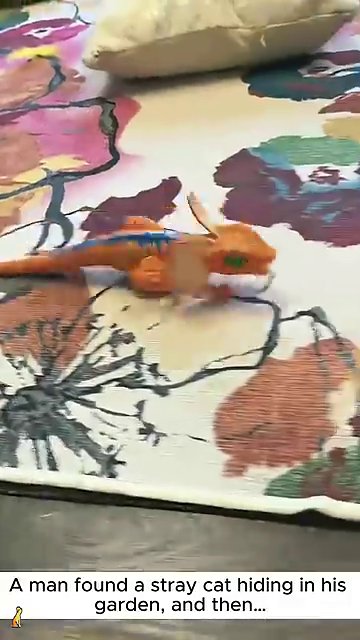
The final image is exactly what you’d hope for: a healthy, happy cat, sitting comfortably with the man who saved its life. No more wet fur. No more fear. Just a warm lap, a gentle hand, and a future full of possibilities.
This is what rescue looks like. It’s not dramatic or heroic in the Hollywood sense. It’s quiet. It’s patient. It’s one person choosing to stop and help a creature that can’t help itself.
And that choice? It changes everything.
The cat didn’t just survive. It thrived. It went from being a tiny, soaked survivor to a playful, affectionate companion. And the man? He gained something too—a bond that no amount of money can buy.
That’s the real story here. Not just a rescue, but a relationship. Not just a second chance, but a shared life.
Sometimes, the best things in life really do start with a single glance at the ground.
