
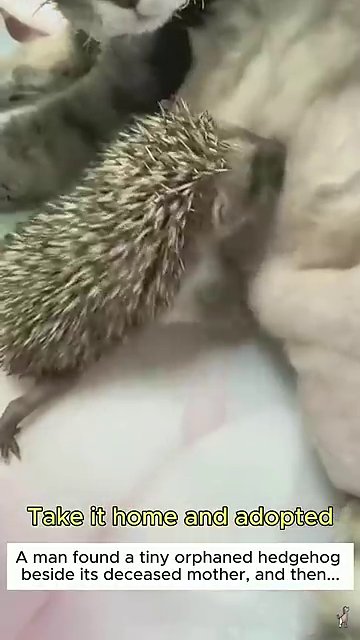
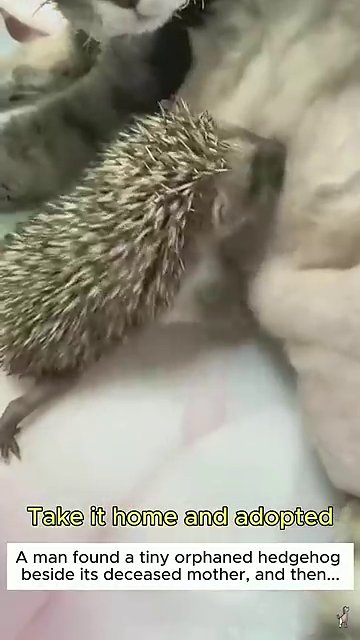
Rescuing an Orphaned Baby Hedgehog: A Story of Survival and Second Chances
It happened so fast. One moment, a tiny hedgehog was nestled safely beside its mother. The next, it was alone, curled up on the cold ground, its eyes still sealed shut. The world must have felt impossibly vast and terrifying. But then, a pair of hands reached down, and everything changed.
This is the story of a rescue that turned a desperate beginning into a joyful, thriving life. It’s a reminder that sometimes, all a creature needs is one person willing to step in and help.
The First Signs of Trouble
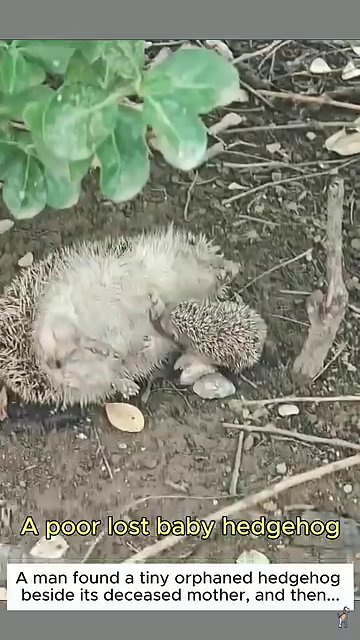
You don’t have to be a wildlife expert to know something is wrong when you see a baby hedgehog lying still in the open. Their mothers are fiercely protective, rarely leaving their young unattended. When you find a tiny hoglet alone on the ground, especially one with its eyes still closed and quills not yet hardened, the situation is almost always an emergency.
In this case, the little one was found in a natural setting—surrounded by dirt, twigs, and dry leaves. It was completely vulnerable. Its quills, which will one day be a formidable defense, were soft and flimsy. This baby wasn’t just lost; it was orphaned, likely after its mother had been killed or had abandoned the nest.
The first instinct is to panic. But the most important thing you can do in this moment is act calmly and quickly. A baby hedgehog can’t regulate its own body heat. Without its mother, it will succumb to hypothermia and dehydration within hours.
The Rescue: From Ground to Safety
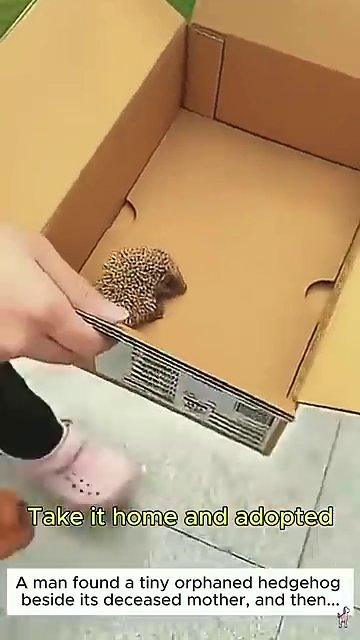
The rescuer didn’t hesitate. Gently, the hedgehog was scooped up and placed into a simple cardboard box. It’s a humble start, but a box lined with a soft cloth provides a dark, secure space that mimics the warmth of a nest. The hedgehog, still curled in a tight ball, seemed to sense the shift. It was still scared, but it was no longer in immediate danger.
This is where the real work begins. Orphaned hedgehogs need round-the-clock care. They need warmth, hydration, and specialized feeding every few hours. It’s not a job for the faint of heart. It’s a commitment that demands patience, attention, and a whole lot of love.
An Unlikely Friendship: The Cat That Cared
One of the most surprising moments in this story came when the hedgehog met the family cat. Instead of hissing or batting at the strange, spiky creature, the adult cat approached with a gentle curiosity. It began to lick and nuzzle the tiny hoglet, treating it almost like one of its own kittens.
This isn’t as unusual as it sounds. Cats are natural nurturers. When they sense a small, helpless animal, their maternal instincts often kick in. The cat’s warm tongue and gentle presence provided the hedgehog with comfort and social contact that no heat lamp or blanket can replace. It was a quiet, beautiful moment of cross-species kindness.
If you’ve ever wondered how to handle a situation where a pet interacts with a rescued animal, it’s always best to supervise closely. But when it goes right, it can be a powerful part of the healing process. For more on caring for vulnerable wildlife, you might find our guide on how to save a newborn bird found alone in your backyard helpful—the principles of warmth, safety, and gentle handling are surprisingly similar.
The First Bath: A Clean Start
After a few days of stabilization, it was time for a bath. Hedgehogs can get pretty grubby, especially when they’ve been living on the ground. A warm bath isn’t just about hygiene—it’s a chance to check for parasites, ticks, and skin issues.
The rescuer placed the hoglet in a small white sink or bathtub. The water was shallow and warm, with a few gentle soap bubbles. The little hedgehog, now more alert and active, seemed to enjoy the sensation. Its quills stood upright, a sign that it was relaxed and healthy.
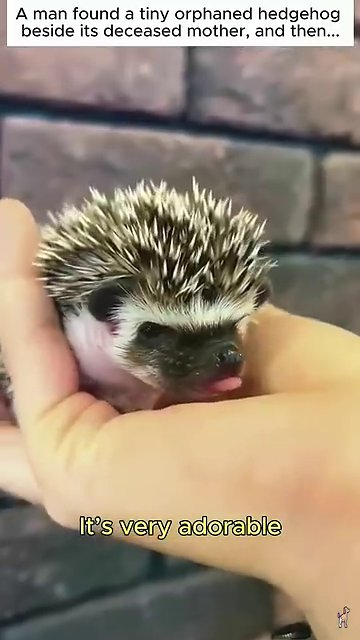
This is a delicate process. You have to be careful not to let water get into their ears or eyes. A soft toothbrush can be used to gently scrub the quills and remove any stuck-on debris. After the bath, the hoglet was dried thoroughly and wrapped in a warm towel. It was a small ritual, but it marked a turning point. The hedgehog was no longer just surviving—it was being cared for.
Growing Strong: The Bond with a Human
As the days passed, the hedgehog grew stronger. Its eyes opened, revealing two bright, curious black beads. It began to explore its enclosure, sniffing at everything with its tiny snout. And it started to bond with its rescuer.
In one heartwarming scene, a woman with dark hair holds the hedgehog in the palm of her hand. The hedgehog is perched comfortably, its little feet finding balance. The woman’s face lights up with a genuine smile. This isn’t a chore anymore. It’s a relationship.
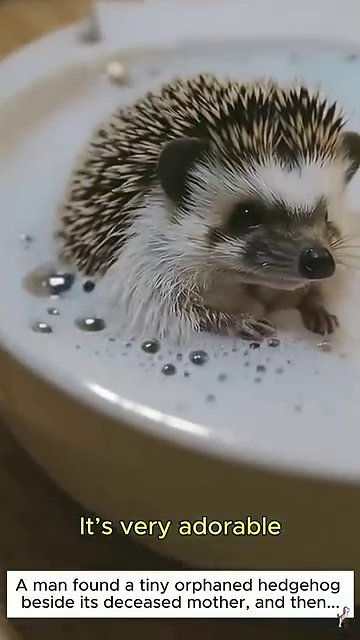
This is the moment every rescuer lives for. The moment when the animal stops seeing you as a threat and starts seeing you as a source of safety. The hedgehog would curl up in her hand, trusting her completely. It’s a profound experience—one that reminds you why you do this work in the first place.
Thriving in a New Home
The final scenes of this story show a hedgehog that is almost unrecognizable from the tiny, helpless ball found on the ground. It’s active, healthy, and full of life. Its quills are sharp and fully developed. Its eyes are bright. It moves with confidence, exploring its environment with the natural curiosity of a healthy young animal.
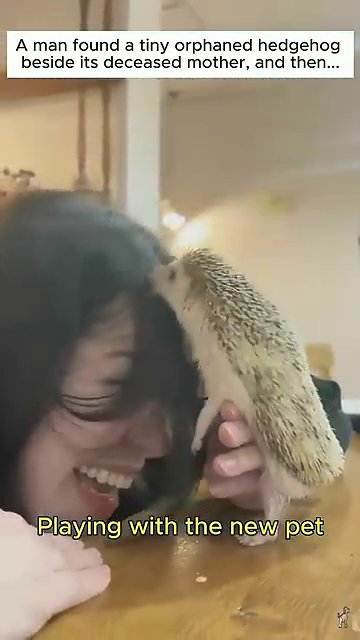
The transformation is complete. What started as a tragedy—the loss of a mother—became a story of resilience. The hedgehog didn’t just survive. It thrived. It was given a second chance, and it seized it with every ounce of its spiky little body.
Key Takeaways for Anyone Who Finds an Orphaned Hedgehog
This story is inspiring, but it’s also a practical lesson. If you ever find yourself in a similar situation, here’s what you need to know:
- Act fast. A baby hedgehog cannot survive long without warmth and food. Time is critical.
- Keep it warm. Place the hoglet in a box with a soft cloth. Use a heat pad set on low, or a warm water bottle wrapped in a towel.
- Don’t feed it cow’s milk. Hedgehogs are lactose intolerant. You need specialized formula (like Kitten Milk Replacer) or goat’s milk.
- Get professional help. Contact a local wildlife rehabilitator as soon as possible. They have the expertise and resources to give the animal the best chance.
- Be patient. Hand-rearing a hedgehog is a 24/7 job. But as this story shows, the reward is immeasurable.
The hedgehog in this story is now living a happy, healthy life. It’s a testament to the power of compassion. One person saw a helpless creature and decided to act. That decision changed everything.
If you’ve ever rescued an animal, you know the feeling. It’s not just about saving a life. It’s about earning the trust of a wild thing. And that is a privilege like no other.
