
A Wild Swan, a Fishing Hook, and an Unbreakable Bond
When a person spots an animal in obvious distress, instinct takes over. You don’t weigh the risks or check the time. You just move. That’s exactly what happened one day near a body of water, where a swan was fighting against something invisible in the water. It wasn’t tangled in weeds. It wasn’t just tired. A fishing hook was embedded in its beak, and the bird was clearly in pain.
What started as a straightforward rescue turned into something far more unexpected. The swan didn’t just accept help and fly away. It chose to stay, forming a bond that blurred the line between wild animal and friend.
The Moment of Discovery
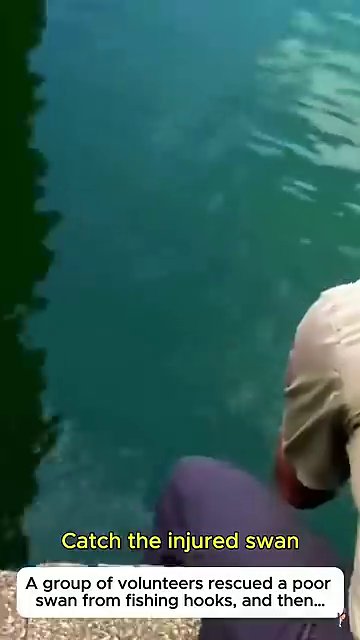
The scene was quiet at first. A swan floated in the water, but something was off. It wasn’t gliding with the usual grace swans are known for. Instead, it seemed stuck, dipping its head and shaking it as if trying to dislodge something.
A rescuer, wearing a beige shirt and purple pants, approached the water’s edge. You can see the moment of recognition in the footage — that split second where you realize the problem is serious. The swan wasn’t just resting. It was hooked.
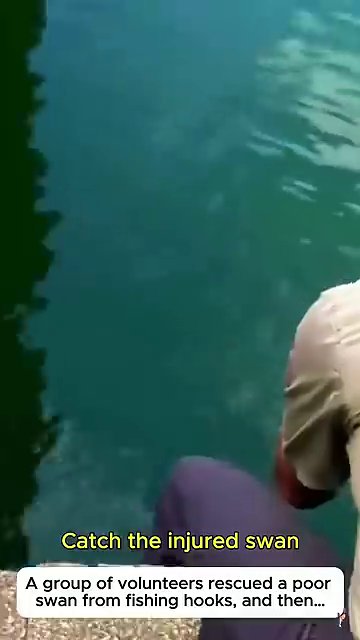
Fishing hooks are deceptively dangerous. They look small, but the barb is designed to hold fast. For a bird, getting hooked means constant pain, difficulty eating, and a high risk of infection. Every movement tugs at the wound. The longer it stays embedded, the worse the damage becomes.
A Delicate Rescue on Land
Getting the swan out of the water was only the first step. Once on land, the real work began. A close-up view shows a person’s hand working carefully near the swan’s beak. The hook is clearly visible, lodged in a sensitive area. Removing it required steady hands and a calm approach.
Swans are powerful birds. They have strong wings and a reputation for being protective. But this one seemed to understand that help was coming. It stayed still as the rescuer worked, holding the beak gently while maneuvering the hook free.
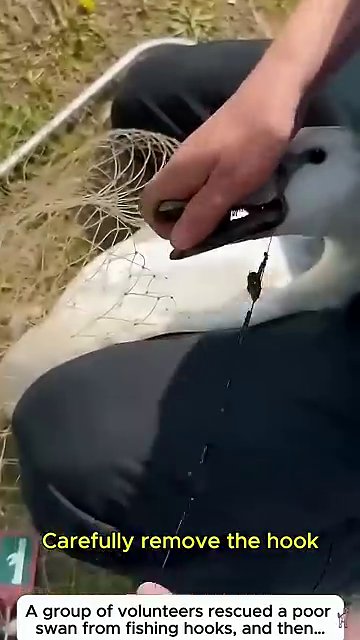
This is where experience matters. Pulling a hook out the wrong way can tear flesh or drive the barb deeper. The rescuer knew to push the hook through first, then snip the barb before pulling it back out. It’s a technique that takes practice, but it minimizes further injury. If you ever find yourself in a similar situation with a bird, remember: never yank. Work slowly, keep the bird calm, and if you’re unsure, contact a wildlife rehabilitator. For more on what to do when you find an animal in trouble, you can read about how to save a newborn bird found alone in your backyard, which covers similar principles of gentle handling and quick action.
The Wound Beneath
Once the hook was out, the full extent of the injury became visible. A close-up reveals a noticeable wound on the swan’s body. It wasn’t just a surface scratch. The hook had been there long enough to cause swelling and tissue damage.
Birds hide pain well. In the wild, showing weakness makes you a target. So while the swan had been floating calmly, it was likely suffering more than it let on. The wound needed cleaning and monitoring. Infections in waterfowl can escalate quickly, especially when the injury involves a foreign object that introduces bacteria.
At this point, the rescuer faced a choice. Release the swan and hope it healed on its own, or provide ongoing care. Many would have let it go. But something about this bird seemed different. It wasn’t trying to flee. It lingered.
Following the Rescuers Home
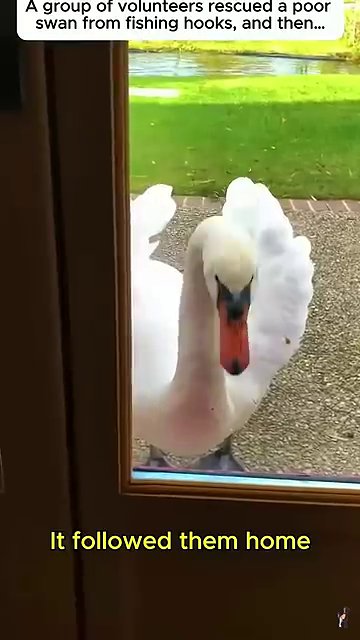
This is where the story takes a turn that feels almost scripted. After the rescue, the swan didn’t swim away. Instead, it followed. One of the most telling images shows the swan standing outside a closed door, peering through the glass as if waiting to be let in.
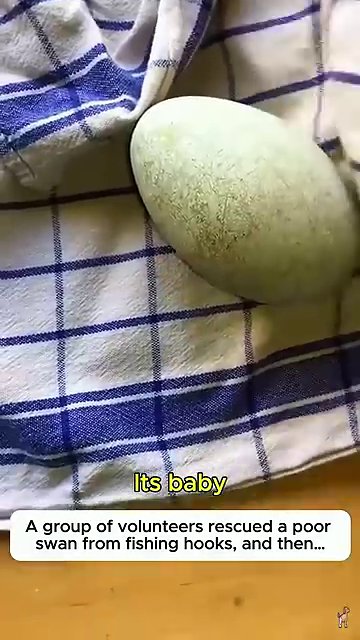
Think about that for a second. A wild animal, recently injured and freed from pain, chooses to stay near the humans who helped it. That doesn’t happen by accident. Swans are intelligent birds with good memories. They recognize individuals and can form lasting associations. This swan associated that person with relief.
It’s a powerful reminder that animals understand kindness. They may not have words for gratitude, but their actions speak clearly. The swan was no longer just a rescue case. It had become a visitor, then a resident, then something closer to family.
Recovery and Play
The final stage of this story is the most heartwarming. The swan didn’t just recover physically. It thrived emotionally. One photo captures a playful moment between the swan and its rescuer, with a watermelon between them.
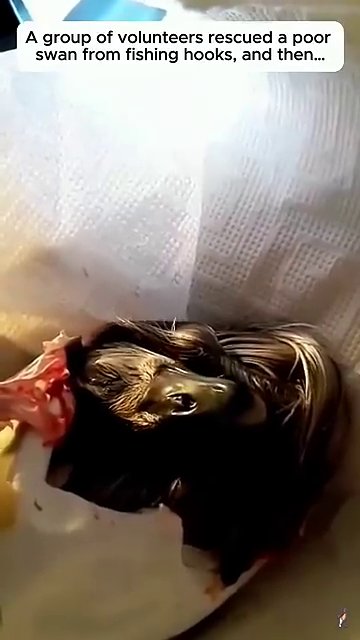
Watermelon might seem like an odd choice, but it’s actually a great treat for swans. It’s hydrating, soft, and full of natural sugars. Swans in the wild eat aquatic plants, grasses, and grains. Watermelon isn’t part of their natural diet, but as an occasional offering from a trusted human, it’s harmless and fun.
The body language in this image says everything. The swan’s neck is relaxed, not tense. It’s engaging with the person, not keeping distance. This is a bird that feels safe. It has moved from survival mode to enjoyment.
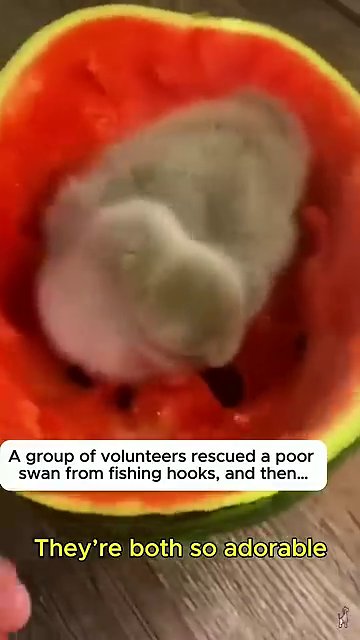
This kind of bond doesn’t form overnight. It builds through repeated positive interactions. Every gentle touch, every meal offered, every moment of patience reinforces trust. The swan learned that this human meant no harm. And in return, it gave something just as valuable: its companionship.
What This Rescue Teaches Us
There are a few lessons tucked inside this story, and they’re worth holding onto.
First, never ignore an animal in distress. That swan might have died if no one stopped. The hook would have festered. Infection would have spread. A simple act of attention saved its life.
Second, patience matters. The rescuer didn’t rush. They worked carefully, even when the bird was scared and in pain. That calmness made the difference between a successful rescue and a traumatic one.
Third, animals remember kindness. This swan chose to stay. It could have flown off the moment it felt better. Instead, it stuck around, forming a bond that enriched both its life and the life of its rescuer.
Not every rescue ends this way. Some animals need to be released back into the wild. Others are too injured to survive on their own. But when a rescue goes right, when the animal recovers and chooses to stay close, it feels like something rare and true.
A Friendship With No Boundaries
The swan in this story found something it probably never expected: a second chance wrapped in a friendship. No fences. No cages. Just a mutual understanding between two very different beings.
The fishing hook is gone. The wound is healing. And in place of pain, there’s now a watermelon-sharing, door-waiting, trust-filled bond that defies the usual rules of wildlife.
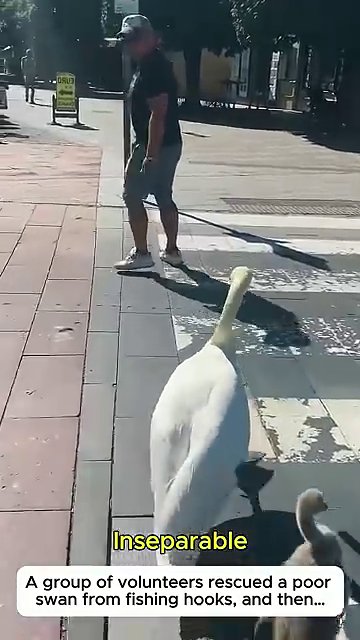
If you ever get the chance to help an animal in need, take it. You might save a life. But you might also gain something you didn’t expect — a friendship with no boundaries.
