
Meet the Cutest Baby Wombat You’ll See Today — And the Rescue That Saved Her
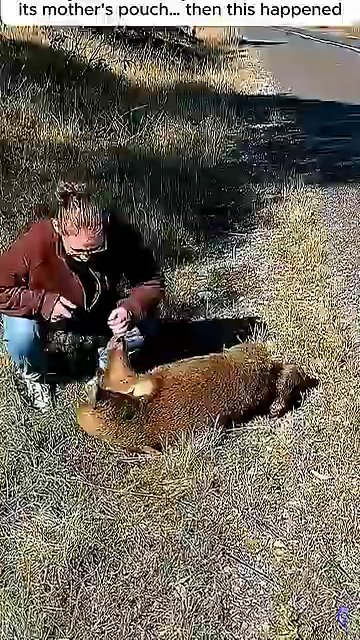
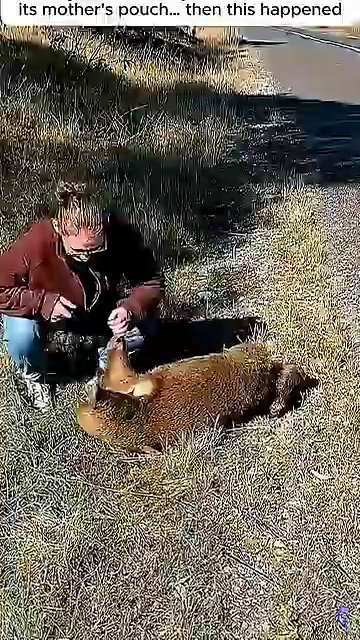
It starts with a small, motionless bundle of fur lying on its back in the grass. A woman in a brown jacket crouches beside it, her hands moving carefully, almost reverently. At first glance, you might think the worst. But this isn’t a tragedy — it’s the beginning of a second chance.
This is the story of a tiny wombat, barely old enough to have her eyes open, who was found alone and vulnerable. And it’s the story of the people who stepped in to give her a future.
Finding a Wombat in Distress
The first thing you notice in the footage is the setting: open grass, a bit of scrubby ground, nothing that looks like a burrow or a mother nearby. The wombat is lying flat on her back, completely exposed. For a baby wombat — a joey — this is a dangerous position. In the wild, they’d be tucked safely inside their mother’s pouch or hidden in a burrow.
The woman’s approach is slow and gentle. She doesn’t grab or rush. She crouches down, examines the joey, and starts to assess the situation. It’s a moment that every wildlife rescuer knows well: the split second where you realize this animal needs help, and you’re the one who has to provide it.
Wombats are marsupials, which means their young are born at an incredibly early stage and finish developing in the pouch. A joey this small — still with closed or barely open eyes — is completely dependent on its mother for warmth, milk, and protection. Finding one alone like this usually means something went wrong. Maybe the mother was hit by a car. Maybe she was startled and the joey fell from the pouch. Maybe she simply didn’t come back.
Whatever the cause, the outcome is the same: without intervention, this joey wouldn’t survive the night.
The First Gentle Touch
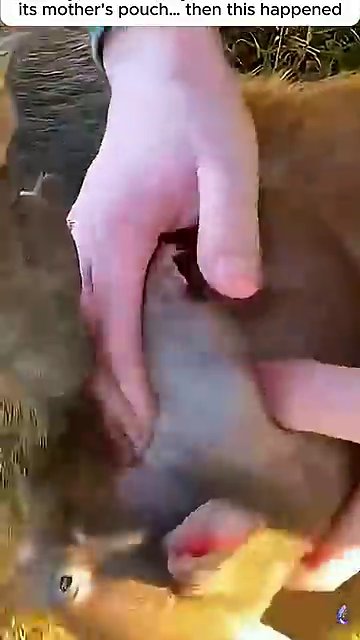
What happens next is telling. A close-up shows a hand — the rescuer’s — cradling the wombat. The joey is so small she fits easily in one palm. Her fur is soft and patchy, not yet the thick, coarse coat of an adult. Her little paws are tucked up, and she makes no attempt to struggle or flee.
That stillness is a red flag. A healthy wild animal, even a baby, usually shows some resistance when handled. But this joey is limp, passive. She’s either too weak, too cold, or too shocked to fight. The rescuer’s touch is gentle but purposeful — supporting the head, checking for injuries, feeling for body temperature.
It’s a delicate moment. Too much handling can stress an already compromised animal. But sometimes, you have to act fast. Hypothermia sets in quickly for a pouch-dependent joey, especially one lying exposed on the ground. The rescuer’s priority here is clear: stabilize first, worry about the details later.
Wrapped in Warmth
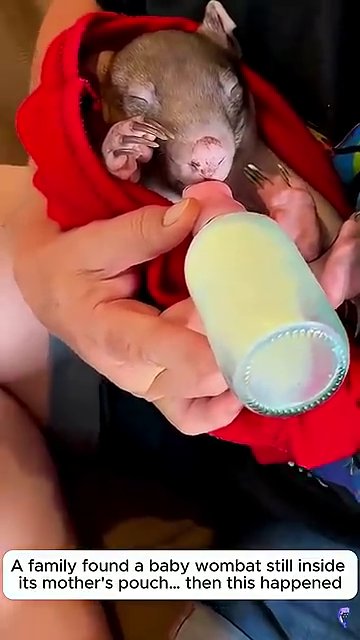
The next image shows the joey wrapped in a piece of red cloth. It’s a simple thing, but it’s exactly what a baby wombat needs at this stage. Marsupial joeys are used to the constant warmth and pressure of their mother’s pouch. Being separated from that feels like falling into a void. Wrapping them securely — creating what rescuers call a “pouch substitute” — provides both physical warmth and psychological comfort.
Notice the cloth is red. That’s not a fashion choice. Bright colors make it easier to spot the animal quickly, especially in a cluttered rescue environment. It also helps keep the joey calm by reducing visual stimulation. Dark, snug, quiet — that’s the goal.
And then comes the bottle.
Bottle-Feeding a Baby Wombat
This is where the story gets both heartwarming and technically interesting. Feeding a baby wombat isn’t as simple as just offering a bottle. Their digestive systems are specialized for marsupial milk, which has a completely different composition from cow’s milk or standard pet formulas. Using the wrong formula can cause fatal diarrhea or malnutrition.
In the video, the joey is shown suckling from a bottle with a pink nipple. Her eyes are still mostly closed, but her mouth works instinctively. That’s a good sign. A joey that refuses to feed is often too far gone. But this one? She’s hungry. She wants to live.
The rescuer holds the bottle at the right angle, letting the joey control the flow. You don’t force-feed a marsupial joey — you let them suckle at their own pace. Overfeeding is a real risk. Their stomachs are tiny, and they’re used to getting small, frequent meals from mom.
It’s slow work. A feeding session can take twenty minutes or more, especially for a weak joey. But each successful feed is a small victory. Each milliliter of formula is fuel for recovery.
The Controlled Environment
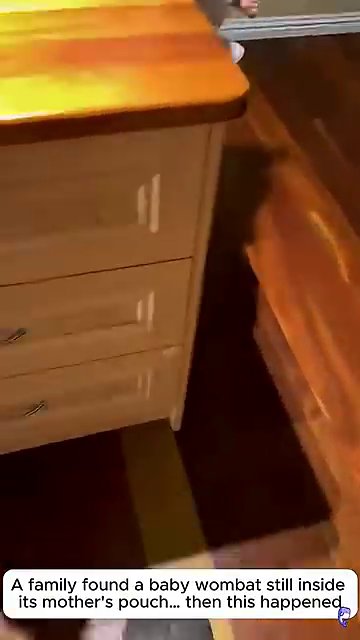
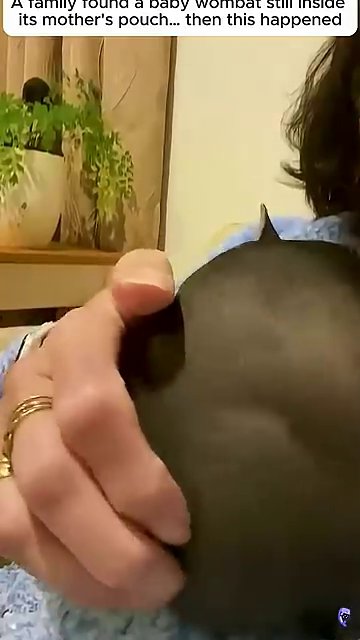
Later footage shows a partial view of a white door with a glass panel. It’s a small detail, but it tells you something important: the wombat is now in a controlled environment. This isn’t a wild burrow under a eucalyptus tree. It’s a rescue facility, a wildlife shelter, or perhaps even a dedicated room in someone’s home.
For a joey this young, temperature control is critical. They can’t regulate their own body heat yet. The enclosure needs to be kept at a steady warmth — think around 30°C (86°F) for a furless or thinly furred joey. Humidity matters too. Too dry, and their skin cracks. Too damp, and they risk respiratory infections.
The glass panel suggests the enclosure is designed for observation without disturbance. Rescuers need to check on the joey frequently — monitoring weight, feeding response, and elimination — without opening the door and letting heat escape. It’s a small but thoughtful setup.
What It Takes to Raise a Wombat
This is where a lot of people get the wrong idea. They see a cute baby wombat drinking from a bottle and think, “I want one.” But raising a wombat joey is a full-time job, and it’s not a short one.
Wombats are slow-growing marsupials. A joey will stay in the pouch for about six to eight months, then spend several more months weaning and learning to be independent. In captivity, hand-raised joeys need round-the-clock care for the first several weeks. That means feeds every three to four hours, including through the night. It means keeping the enclosure clean, monitoring for signs of illness, and providing the right stimulation for muscle development.
And it means knowing when to let go. The goal of wildlife rescue is always release back into the wild. A wombat that becomes too habituated to humans can’t be safely returned. Rescuers have to walk a fine line: provide enough care to keep the animal alive, but not so much human contact that the joey loses its natural wariness.
A Second Chance
Looking at the images of this tiny wombat — from limp and exposed on the grass to wrapped, fed, and resting safely — it’s hard not to feel a surge of hope. This is what rescue looks like. It’s not glamorous. It’s not fast. It’s a lot of small, patient actions taken one after another.
The woman who found this joey didn’t know if she’d survive. Nobody ever does. But she acted anyway. She crouched down, she picked up that tiny body, and she decided to try.
That’s the heart of wildlife rescue. It’s not about guarantees. It’s about showing up.
For this little wombat, the future is still uncertain. She has weeks of bottle-feeding ahead, then months of growth and rehabilitation. She’ll need to learn what grass tastes like, how to dig a proper burrow, and how to recognize danger. But she’s alive. She’s warm. She’s fed. And she has people who care.
That’s a pretty good start.
How You Can Help
If this story touches you, there are real ways to make a difference. Wildlife rescue organizations around the world rely on donations, supplies, and foster carers. You don’t need to be a vet to help. You can donate formula, transport animals to care centers, or simply share stories like this one to raise awareness.
And if you ever find a baby animal alone — whether it’s a wombat, a kangaroo, or even a newborn bird in your backyard — the best first step is always the same: don’t rush in. Observe from a distance. The mother might be nearby. If the animal is clearly injured or in danger, contact a local wildlife rescue group before intervening.
Because every rescue starts with someone who notices. Someone who cares enough to stop, look, and act.
Just like the woman in the brown jacket, crouched in the grass, giving a tiny wombat her first real chance at life.
